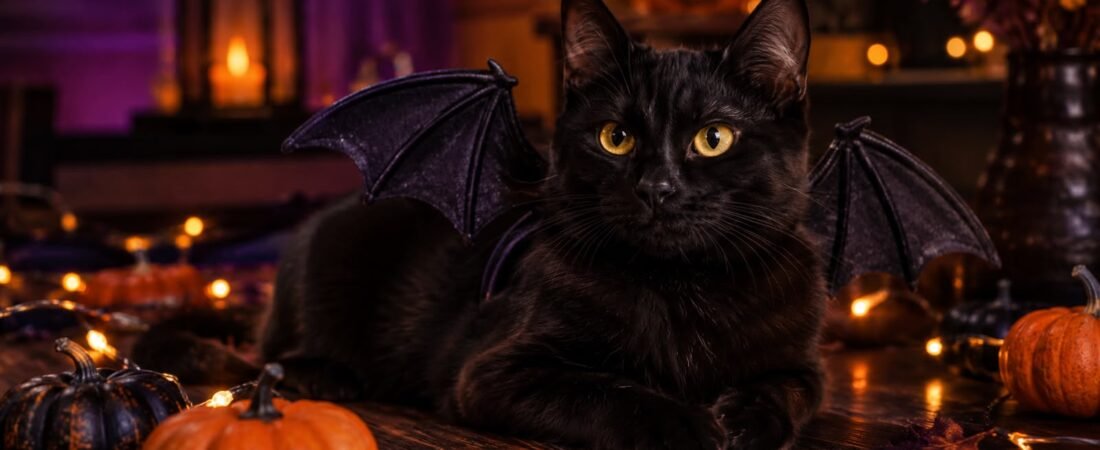
The pet-costume aisle has become a small theater of human optimism: bat wings, tiny cowboy hats, Dracula collars, fairy wings, and even a pickle suit. This Halloween, Americans are expected to spend $920 million on pet costumes, according to the National Retail Federation. Cat costumes are part of this growing trend, offering playful and creative ways to dress up feline friends. Pumpkin remains the leading pet look, chosen by 11.6% of people dressing up their animals, followed by hot dogs at 5.9% and ghosts at 2.8%. That is a lot of money spent on an activity many cats will regard as a personal insult. (nrf.com)
Still, feline fashion has its own logic. Dogs can wear full-body dinosaur jumpsuits and accept the arrangement with a wag. Cats demand a more diplomatic approach: a brief photo session, a lightweight accessory, an exit strategy. The most successful cat Halloween costumes are not the most elaborate. They are the ones that understand a cat is not a plush toy with opinions postponed until later.
Table of Contents
The 2026 Cat Costume Trend Is Smaller, Stranger and More Practical
Halloween spending is holding near record levels in the United States: NRF projects $13.5 billion in total holiday spending for 2026, with $4.4 billion earmarked for costumes. Nearly half of shoppers started buying in September or earlier, and 34% of those early buyers said they wanted to spread their budgets out. Allison Zeller, NRF’s vice president of industry and consumer insights, described consumers as still committed to Halloween but increasingly “thoughtful and strategic” about value. (nrf.com)
That budget consciousness favors the kind of cat costume that can be worn for a few photographs, perhaps reused next year, and does not require buying an entire miniature wardrobe. A $12 accessory that produces one excellent picture is easier to justify than a $30 ensemble that spends October 31 under the sofa.
The accessory-first look
Retailers are quietly acknowledging the obvious: cats are better candidates for partial costumes than head-to-paw transformations. Petco’s current cat selection includes fairy wings, bat wings, a cowboy costume, a two-piece witch set, a Dracula costume and a skeleton hoodie. Several of those looks rely on a collar, capelet, wings or a simple hood rather than sleeves and trouser-like leg openings. (petco.com)
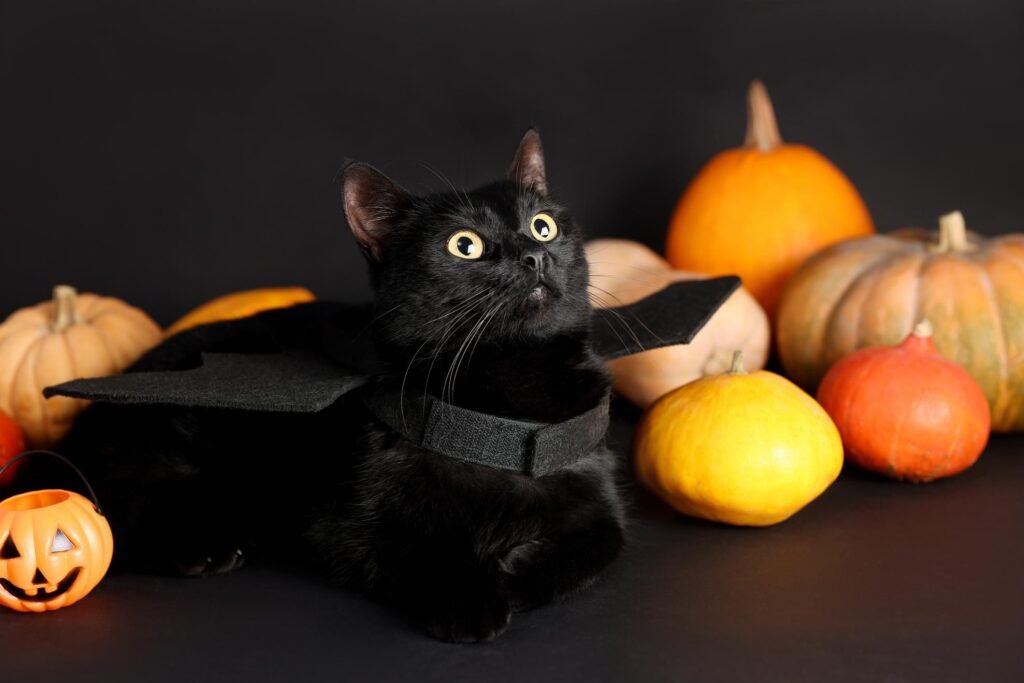
That is the right direction. Wings can read clearly in a photo without interfering with a cat’s gait. A soft vampire collar gives the silhouette of a costume without requiring a cat to tolerate a mask. And a witch hat, if it stays on at all, needs only survive long enough for the camera shutter.
The trendiest choice is often the least ambitious one. A black cat in bat wings is practically a complete Halloween production design; adding a complicated polyester bodysuit rarely improves the image.
Food costumes are having their moment
Novelty food costumes remain a dependable part of pet Halloween culture, and the pickle is this season’s most absurdly specific example. Petco sells a pickle cat costume in extra-small and small/medium sizes for $12. Its product listing describes it as an illusion-style outfit and warns that it is intended for only brief, supervised wear. (petco.com)
The appeal is not subtle. A cat dressed as a pickle has no narrative coherence, which is exactly why the picture works.
But buyers should resist mistaking online reviews for scientific testing. One owner reported that the suit felt tight but worked for photos; another praised its softness and Velcro closure while conceding that the ear holes did not suit her cat. That is useful anecdotal evidence, not proof of universal fit. Cats vary wildly in head shape, coat density, patience and willingness to forgive. (petco.com)
The Best Halloween Costumes for Cats Start With the Cat
Here is the uncomfortable truth for feline fashion lovers: many cats should not wear costumes at all.
Cats are sensitive to changes in body sensation and control. A strange fabric around the chest, elastic under the front legs or a hat resting near the ears can turn a cute ritual into a stress event. Petco’s animal-care guidance lists freezing in place, flattened ears, a tucked tail, excessive grooming, hissing, hiding, rapid breathing and dilated pupils among the warning signs that the outfit needs to come off. (petco.com)
This is not a minor caveat. It is the central rule.
The two-minute test
Try the costume on days before Halloween, not while guests are arriving and the doorbell is ringing. Let the cat sniff it first. Then put it on for a minute or two, pair the experience with a favorite treat, and observe rather than persuade. If the cat walks normally, turns easily and behaves like itself, a very short photo session may be reasonable. If it crouches, backs away, grooms compulsively or goes rigid, stop.
The American Society for the Prevention of Cruelty to Animals makes the same point more bluntly: a costume should not constrict movement, hearing, sight or breathing, and any distressed animal should be allowed to remain uncostumed. (aspca.org)
A themed bandana is not a consolation prize. For most cats, it is the superior design solution.
Fit matters more than the label
Ignore breed-based assumptions. Measure neck and chest circumference, then compare them with the manufacturer’s chart. The garment should allow two fingers between the fabric and the cat’s body; it must not press on the throat, cover the eyes or ears, or impede whiskers. Whiskers are sensory equipment, not decorative trim. (petco.com)
Avoid long ribbons, glued-on gems, bells, dangling legs and loose elastic loops. These are not merely tacky details. They can become choking hazards, get caught on furniture or be swallowed. The ASPCA specifically advises checking for small, dangling or easily chewed-off pieces before an animal wears a costume. (aspca.org)
And never leave a costumed cat alone. Not for a party, not while answering the door, not for the time it takes to refill a drink.
Four Cat Costume Ideas That Actually Earn Their Keep
Feline Halloween style works best when the visual joke is immediate and the physical burden is minimal.
1. The bat-wing black cat
This is the gold standard because it enhances what is already there. A lightweight set of wings on a black, gray or tuxedo cat creates a gothic silhouette without disguising the animal. Petco’s current cat-costume range includes bat wings at $12, which is sensible pricing for an accessory designed for a short supervised appearance. (petco.com)
Pair it with a dark backdrop and skip the flash if possible. The cat has already done most of the styling work.
2. The tiny vampire
A Dracula collar or modest cape gives a recognizable Halloween read while leaving the legs free. It also pairs easily with a human costume: one person as Mina Harker, another as Van Helsing, cat as the household’s reluctant count.
The adult vampire costume remains a major mainstream choice, with 4.2 million Americans planning to dress that way in 2026, according to NRF. A coordinated vampire-and-cat photo is, therefore, not exactly avant-garde. But classics endure because they photograph well. (nrf.com)
3. The witch with limits
A witch collar, small hat or soft two-piece set suits the Halloween brief perfectly. But hats are where many owners overreach. If the cat repeatedly shakes its head, flattens its ears or paws at the brim, abandon the hat. Keep the collar or bow, take the photograph, move on.
4. The pickle, for the committed surrealist
The pickle costume works only because it refuses dignity altogether. It is a good option for a cat that tolerates a soft, open-faced garment for a minute or two. It is not a costume for greeting trick-or-treaters, roaming around a party or posting up on the porch like a green little host.
Frankly, that last limitation applies to every cat costume.
Halloween Night Is Not a Runway
The costume is the easy part. Halloween itself can be overwhelming: unfamiliar visitors, repeated doorbell sounds, open doors, dropped candy wrappers and candles. The Cat Fanciers’ Association advises introducing cats gradually to unfamiliar costumes, including the owner’s own outfit, and warns that frequent door opening creates an escape risk. (catvets.com)
Set up a quiet room with food, water, litter, bedding and familiar toys before visitors arrive. Keep candy out of reach. Make sure identification is current, ideally with both a collar tag and microchip. If your cat wears a costume at all, make it a controlled photo moment before the household turns noisy.
The future of cat Halloween fashion will probably involve more clever accessories, more coordinated owner-and-pet themes, and inevitably more oddly specific food costumes. Fine. But the best feline look will remain the one that ends quickly, safely and with the cat still willing to sit near you afterward.
Everyday Cat Health: Practical Ways to Support Your Cat’s Well-Being